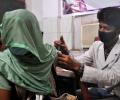
According to officials, an additional dose of vaccine is different from a booster dose.
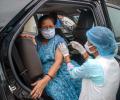
These decisions were taken by the ministry based on the fresh recommendations by The National Expert Group on Vaccine Administration for COVID-19 (NEGVAC) and have also been communicated to the states and union territories, an official statement said.
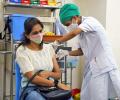
The Serum Institute of India is the first Indian company to seek approval for the COVID-19 booster dose.
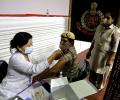
The government is likely to soon reduce the gap between the second dose of Covid-19 vaccine and the precaution dose from the current nine months to six months, official sources said on Wednesday.

The World Health Organisation (WHO) has classified the EG.5 strain of the SARS-CoV-2 virus circulating in different parts of the world, including India, as a 'variant of interest' but said it did not seem to pose more of a threat to public health than other strains.

'The protective effect of the vaccine lasts for about nine months to a year.' 'For health workers that period is already over. This is the right time to augment their immunity.'
Mandaviya reviewed the pandemic situation, status of vaccination drive and the global scenario of new variants of Covid.
So far, less than 1 per cent of the target population of 77 crore in the 18-59 age group have been administered the precaution dose.

The decision empowers pregnant women to make an informed choice on taking the Covid vaccination, the ministry said, adding these women can now register on CoWIN or walk-in to the nearest Covid vaccination centre to get themselves inoculated.

'There is no emergency of a third wave that we are rushing for booster doses.'
He explained, "Children between the age of 12 and 18 years, particularly those in the age group of 15 to 18 years, are very much like adults. Our research within the country also says that almost two-thirds of the deaths below 18 years which occurred due to COVID in India are within this age group. So, this decision was mainly taken to protect the adolescents."

The Kraken COVID-19 variant accounts for almost 41 per cent of all Covid infections.
The Subject Expert Committee on COVID-19 of the CDSCO on October 12 after deliberating Bharat Biotech's EUA application had recommended granting emergency use approval to Covaxin for use in the 12-18 years age group with certain conditions.

The current Covid situation in India is under control and there are no reasons to panic, said Dr N K Arora, the chairperson of National Technical Advisory Group on Immunization (NTAGI).
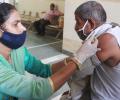
'The key purpose of vaccination is to prevent hospitalisation, severe disease, and death.' 'All vaccines work equally, although mild disease cannot be prevented.'
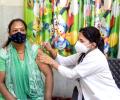
The government on Friday said there is no need to panic on the need for an immediate change in the dosage interval of Covishield vaccine, underlining that reducing the time gap requires proper scientific study in the Indian scenario.
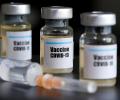
The procurement and distribution will be centralised though the government is yet to take a call on the initial number of doses that will be procured.

'We seem to be in a situation where we can do little, and nothing needs to be done anyway.'
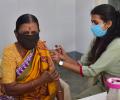
'Better to prevent than to wait for evidence. Protection delayed can also mean protection denied'
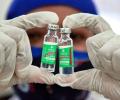
The Kerala high court has directed the Centre to allow scheduling, on CoWIN portal, of second Covishield dose after four weeks from the first for those who want to take it earlier than the present suggested gap of 84 days.
Responding to another question, Choubey said that the phase-I of clinical trials have revealed excellent safety of the two candidate vaccines indigenously developed by Bharat Biotech in collaboration with Indian Council of Medical Research and Cadila Healthcare Ltd, and now their immunogenicity testing is in progress. Their phase II clinical trials are ongoing.

The reason is that because of the hybrid immunity after three waves of natural infection and a large proportion of adults receiving both doses of COVID-19 vaccine, the susceptible pool has come down drastically, Lahariya said.
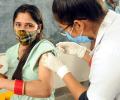
"Pregnancy doesn't increase the risk of acquiring SARS-COV-2 infection but appears to worsen the clinical course as compared to non-pregnant women'

The NTAGI has also stated that those having laboratory test proven SARS-CoV-2 illness should defer COVID-19 vaccination for six months after recovery, the sources said.
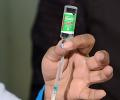
The decision to increase the gap between two doses of Covishield from 4-6 weeks to 12-16 weeks was based on scientific decision and there was no dissenting voice among the National Technical Advisory Group on Immunisation members.

A new sub-lineage BA.2.75 of the Omicron variant of the coronavirus has been detected in countries like India and the World Health Organisation is following this, Director-General Tedros Adhanom Ghebreyesus said.

The endemic stage is when a population learns to live with a virus.

Only half India's population has received the first shot of Covishield and Covaxin and the government's immediate task is to first vaccinate its adult population before placing its focus on children.

In September, Bharat Biotech aimed to supply 35 million doses, and take this up to 55 million by October. This is still less than what the Indian government expects from the company.

Most of those who tested positive either recently arrived from African countries or were in contact with such people.

'Prevention plus vaccination is what is going to take us into better territory by September or October.'

'We cannot be naughty and expect the government to do good!' 'We have to behave ourselves and then we can expect the government to support us.' 'If we are able to protect ourselves well, then we should not be having deaths.' 'Unfortunately, people have gotten into this super scary event participation (mode) -- birthday parties, large gatherings.' 'Among the people who have attended those, 80 to 90 per cent of them have come down with COVID-19.'
